This site uses cookies for analytics and to improve your experience. By clicking Accept, you consent to our use of cookies. Learn more in our privacy policy.
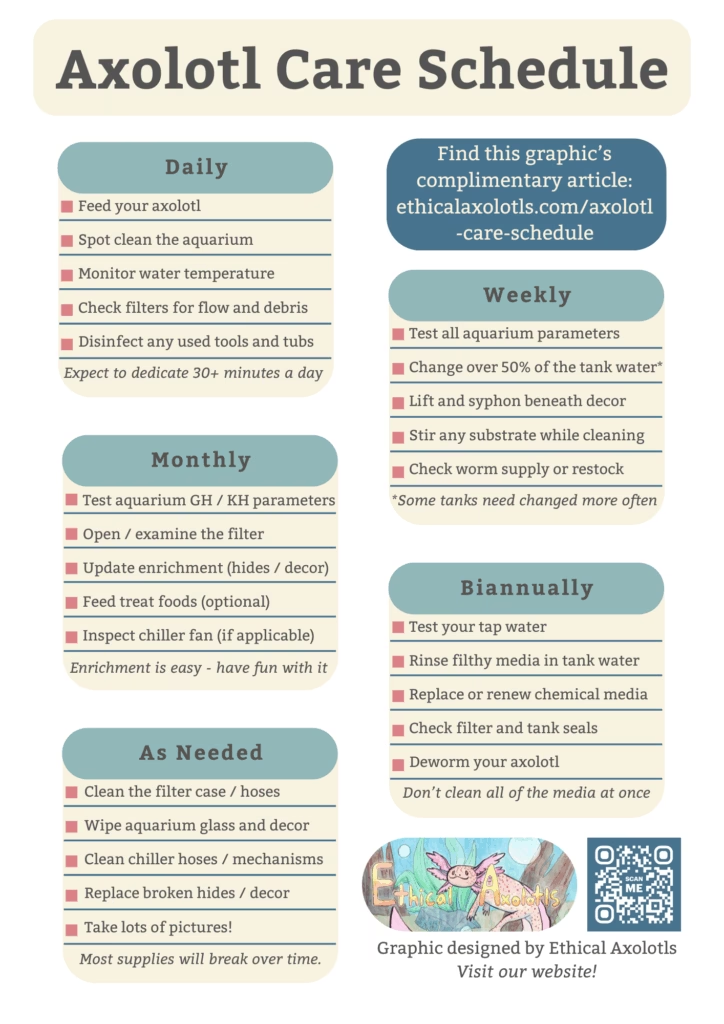
They typically need to be fed once daily, however an axolotl under 5” in size will happily eat twice per 24 hours.
‘Spot clean’ the aquarium.
A turkey baster, or small syphon hose work great for debris removal.
The debris in question is primarily poop, however uneaten food or any decaying matter should be disposed of before it can turn into an ammonia spike.
Monitor water temperature.
Use a digital thermometer – temperature gauges are less accurate, and glass thermometers may shatter.
The average water temperature of the aquarium (or tub) will typically vary throughout the day and night, start by looking at the temperature at the hottest and coldest times of the day, then check daily after a trend is observed.
Check filters for flow and debris.
If the filter flow has decreased, examine the filter mechanics for blockages.
Algae, pet hair, substrate, plants, and excrement can all block filter flow, reducing its efficacy.
Most filters will make noise or decrease in function if the motor has trapped air within.
Disinfect any used tools and tubs.
Wash all used supplies in hot water.
Scrub all surfaces with a brush and cleaning solution.
Soaking tools overnight in the cleaning solution is a great practice.
Do not use cleaning agents with surfactants or fragrances.
Weekly
– Some tanks need changed more often
Test all aquarium parameters.
This includes pH (low and high range), ammonia, nitrite, and nitrate.
pH naturally drops over time, but if the pH tests below 7.4 consistently, consider a pH additive such as baking soda.
Change over 50% of the tank water*
Depending on nitrate levels, you should change at least 50% of the aquarium water once a week.
Some stocking levels need additional water changes, and more frequent water changes are safe for both the animals and the aquarium chemistry.
Ensure your filter media remains submerged while draining the tank – beneficial bacteria can die if the media dries out.
Don’t forget to dose the appropriate treatments and products for the amount of water you replace. Some dechlorinators are designed to allow for overdose, but if you remove 20 gallons from a 40 gallon tank, add enough product (salt, dechlorinator, pH / GH additives) to dose 20 gallons – not 40.
Lift and syphon beneath decor.
Poop and debris easily becomes trapped under decor, hides, and filters. Ideally, everything in the tank should be cleaned underneath at least weekly.
Stir any substrate while cleaning.
Substrates will develop noxious gas pockets, and anaerobic bacteria will grow within these over time. While some anaerobic bacteria contribute to denitrification, other anaerobic bacteria can cause infections.
Plants do not need to be removed, however you should only choose aquarium plants that tolerate being frequently disturbed.
Check worm supply or restock.
Live earthworms will typically last in the refrigerator for 1-2 weeks, though a well cared for compost bin will maintain a worm colony almost indefinitely.
Earthworms are typically fed live, however you will have to cut up the worms for a juvenile axolotl.
Monthly
– Enrichment is easy – have fun with it!
Test aquarium GH / KH parameters.
General hardness (GH) must be above 10dGH at all times, and if your tap water is below 10dGH, you should consider a GH additive such as Seachem Replenish. If GH swings up or down significantly within a week, you’ll want to figure out why.
Carbonate hardness (KH) should be above 6dKH, and swings in KH can result in pH instability, resulting in excessively acidic or alkaline conditions.
Keep note of the GH / KH measurement trends. This can help you identify water issues.
Open / examine the filter.
Filters should not be ‘deep cleaned’ due to risk of destroying your valuable colonies beneficial bacteria, but large clumps of waste need to be removed, and general filter condition and function should be observed.
Update enrichment (hides / decor).
You don’t have to buy new hides every month, but rearranging the decor can provide interesting new areas for your axolotl to explore.
While most axolotls don’t swim upwards very much, they will generally make use of climbing areas even if they are higher in the aquarium.
Feed treat foods (optional).
While an axolotl’s primary diet should be nightcrawlers, a monthly snack of bloodworms, raw salmon, or unseasoned cocktail shrimp is fine treat.
Some live foods are acceptable to feed to axolotls, such as guppies and shrimp, but they must be quarantined a minimum of 30 days before feeding.
Inspect chiller fan (if applicable).
If you have a chiller, check the fan and tubing for dust and other debris. Build-up within the components may result in reduced chiller efficacy and risk of fire.
Biannually
– Don’t clean all of the media at once
Test your tap water.
Test ammonia, nitrite, nitrate, pH, GH, and KH levels in your tap water. If your tap water parameters change, contact your water company or have your well tested.
Spring snow melt, flooding, and earthquakes can all cause chemistry changes in source water, so test your tap water when any of these apply.
Rinse filthy media in tank water.
The easiest way to maintain reusable filter media without crashing your cycle is to rinse media in a bucket of tank water, and to only clean a portion of your media each time.
Any media that has degraded enough to shed should be replaced.
Replace or renew chemical media.
Most carbon / charcoal filter pads must be replaced, and they’re usually only useful for medication / tannin removal. Seachem Purigen is a reusable chemical filtration media that also may impact medicine potency.
Check filter and tank seals.
Filter seals and o-rings degrade over time, and they need cleaned and replaced as they break down. If your filter is leaking, it’s usually an issue with the seating of the seal, and it can be fixed by adjusting or replacing seals.
Deworm your axolotl.
Fritz Expel-P (levamisole) and Sera Nematol (emamectin) are both viable deworming agents, and dosing instructions are similar between the two (but not identical).
Deworming may be done more often, however a biannual deworming schedule offers reasonable protection against nematode infections.
The above deworming agents are specifically designed to treat nematode / wasting parasitic infections, and will not treat round, hook, tape, or anchor worms. Consult your veterinarian for treatment of these parasites, and please note that dimilin is the primary effective treatment against anchor worms.
As Needed
– Most supplies will break over time
Clean the filter case / hoses.
Any non-porous material in your filters can be wiped off or scrubbed with a dedicated cleaning brush, however cleaning agents should be avoided unless resetting the filter.
Appropriate cleaning agents for non-porous filter material and hosing include vinegar, bleach, and hydrogen peroxide. Make sure to rinse and air dry well.
Wipe aquarium glass and decor.
Check your hides for wear and tear while you clean, the acids that are naturally produced in an aquarium can cause decor to break down. Some decor lasts longer than others, but you shouldn’t use anything in your aquarium that is susceptible to breaking down.
Clean chiller hoses / mechanisms.
Similarly to your filter, you should wipe down the components of your chiller regularly.
Replace broken hides / decor.
If any hides or decor have deteriorated or broken, they should be removed to prevent injury or parameter imbalance.
Wipe down chiller coils.
Chiller coils must be occasionally wiped down, to allow the chiller to function effectively.